
Olympic silver medallist Vijay Kumar has called for an independent review of the National Rifle Association of India's (NRAI) coaching appointments, citing concerns about transparency, eligibility criteria, and potential conflicts of interest. The NRAI, however, asserts that appointments are merit-based and views Kumar's concerns as 'sour grapes' after his own non-selection.
A Delhi consumer commission has directed Punjab and Sind Bank to refund Rs 10,000 to a customer whose ATM transaction failed to dispense cash but debited his account. The bank was also ordered to pay significant compensation for delayed reversal, mental agony, and litigation expenses, reinforcing consumer rights in banking disputes.

An initial analysis reveals that an Air India Airbus A320 flying from Phuket to Delhi experienced multiple hydraulic system failures, leading to a four-second loss of flight controls and a sudden 300-foot altitude drop, injuring 24 people. The incident is under investigation by the AAIB, and the pilot-in-command subsequently tested positive for a psychoactive substance, prompting Air India to implement mandatory testing for all its pilots.

An Indian AI Research Organisation official says India has adopted a balanced and pragmatic approach to AI regulation, avoiding the extremes of the US and EU models.
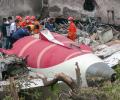
'...because that protects their aviation industry.' 'The Boeing 787 is one of the most widely-flown wide-body aircraft in the world, and Airbus is running neck-and-neck with Boeing.' 'Airbus is not going to let an opportunity like this pass.' 'If a software problem with the 787 is confirmed, they will use it to increase their own orders.'

Union Minister Jitendra Singh launched two advanced weather forecast products developed under the Ministry of Earth Sciences (MoES), aimed at delivering hyper-local, impact-based and artificial intelligence (AI)-driven weather services across India.

The Consumer Affairs Ministry is developing machine-readable SMART standards using AI to reduce industry compliance burden. This initiative aims to modernise India's standards ecosystem, with the Bureau of Indian Standards transitioning from a regulator to a facilitator, promoting private sector testing and faster processes.
Union Home Minister Amit Shah lauded UPI on its 10th anniversary, highlighting its role in India's digital transformation. Launched by NPCI in 2016, UPI has become the world's largest real-time payment system, witnessing a massive surge in transaction volume and value, demonstrating its success in empowering people with swift, seamless, and secure digital transactions.

Finance Minister Nirmala Sitharaman announced that the Goods and Services Tax (GST) Council's October 7 meeting will focus on 'GST 2.0' process reforms, including e-invoicing and input tax credit rules, while also addressing complex issues surrounding the taxation of the digital economy and cryptocurrency.

The BJP has accused the Congress of spreading "fake news" regarding UPI transaction charges, asserting that the government has clarified that consumers will not be levied merchant discount rate (MDR) charges. This comes after the Congress criticised a government notification, alleging it paves the way for imposing fees on UPI transactions. The BJP has strongly refuted these claims, highlighting that most UPI transactions remain free and the government provides incentives to maintain a charge-free ecosystem for users.
New research from the University of Sheffield indicates that greenhouse gas emissions from petrochemical production could increase by 50 per cent by 2050 under a business-as-usual scenario. The study, published in Nature Sustainability, provides the first detailed global map of these emissions, identifying key sources and highlighting the challenge of decarbonising the sector.

The Retailers Association of India (RAI) has voiced concerns that the government's new 0.4 per cent Merchant Discount Rate (MDR) on UPI transactions above Rs 2,000 could reverse the progress of digital payment adoption among small retailers. This fee, effective October 15, places the burden on merchants operating on thin margins, potentially pushing them back to cash transactions and undermining the government's formalisation agenda, especially ahead of the festive season.

Finance Minister Nirmala Sitharaman met with bank heads to discuss risks related to Artificial Intelligence (AI) following global concerns over Anthropic's Mythos model and its potential threat to financial systems' data security.

In flood-ravaged Nepal, drones are playing an unprecedented role in disaster response, from airlifting bodies from inaccessible areas to delivering essential supplies and searching for trapped workers. This innovative use of UAVs is transforming humanitarian aid and rescue operations in the challenging Himalayan terrain.

Russian President Vladimir Putin has proposed a new investment platform, based on the New Development Bank (NDB), to fund projects in trade, infrastructure, logistics, and technology across BRICS nations, emphasising that the grouping's expanding economic cooperation is not 'against anyone' but aims to advance members' national interests.
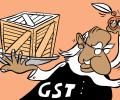
Tax experts clarify that merchants will pay 18% GST on Merchant Discount Rate (MDR) for UPI payments exceeding Rs 2,000, effective October 15. However, registered merchants can claim Input Tax Credit (ITC), mitigating the tax burden. This move is expected to generate significant GST revenue for the exchequer while funding payment infrastructure.

Sarvam AI, an Indian full-stack sovereign artificial intelligence company, has achieved unicorn status after raising $234 million in a Series B funding round led by HCLTech and Bessemer Venture Partners, with HCLTech acquiring a 10.46 per cent stake.
Haryana has significantly reformed its land records administration, reducing pending mutation cases by over 90% and implementing an auto-mutation system. This digitisation effort aims to make land management faster, more transparent, and technology-driven, improving efficiency and public trust.

Employers are increasingly prioritising professionals with four to 10 years of experience.

Veteran skeet shooter Mairaj Ahmad Khan expresses strong optimism about the future of Indian shooting, attributing the potential rise to government-backed initiatives like Khelo India. He is preparing for his third Asian Games appearance and believes India will have the best team across all shooting disciplines in the next four years, thanks to enhanced grassroots development and support systems.
Prime Minister Narendra Modi addressed the 57th Convocation Ceremony of IIT Delhi, advocating for increased female participation among medallists and awardees. He also advised graduates against social media distractions, encouraged self-improvement, and inaugurated the Param Pragya AI supercomputing facility.
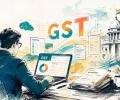
As India marks a decade of the Goods and Services Tax (GST), the focus is shifting towards enhancing efficiency through artificial intelligence, data sharing, and process simplification. The reform, which unified India's indirect tax system, has significantly broadened the tax base and boosted revenues, with future plans including a streamlined two-tier rate structure and continued technological integration to reduce compliance costs and combat evasion.

The Aircraft Accident Investigation Bureau (AAIB) has issued an interim statement on the probe into the Air India AI171 plane crash that killed 260 people last year, confirming that the investigation is ongoing and the final report will be released after all processes are complete.

Opposition parties, including Congress, TMC, and RJD, have strongly criticised the government's decision to impose a 0.4% Merchant Discount Rate (MDR) on UPI transactions exceeding Rs 2,000 made to merchants. They allege the move is a result of "American imperialism" and will lead to increased commodity prices, while the government maintains the charge is on merchants and not consumers, with person-to-person transactions remaining free.
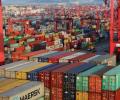
Civil Aviation Minister K Rammohan Naidu announced significant opportunities for Micro, Small, and Medium Enterprises (MSMEs) within India's rapidly expanding aviation sector. With Indian airlines ordering over 1,600 aircraft and the aerospace market projected to double by 2035, there's a massive scope for Indian suppliers to integrate into global aerospace supply chains, moving beyond assembly to design and manufacturing.

Tata Elxsi has partnered with Sarla Aviation to develop the Shunya air taxi platform. Tata Elxsi will provide engineering support for avionics, software integration, and certification, while Sarla Aviation will lead the design and type certification of the electric vertical take-off and landing (VTOL) aircraft.

OpenAI and Anthropic are not simply enabling new software capabilities, they are moving directly into enterprise execution, workflow ownership, and decision orchestration.
Researchers from the Indian Institute of Science (IISc) and Technical University of Denmark have developed a recombinant antivenom that provides broad protection against the venom of spectacled cobras, monocled cobras, and Indian king cobra species in mice. This lab-produced antivenom offers a next-generation solution to traditional animal-derived antivenoms, addressing issues like variability and limited species coverage.
Chief Economic Adviser V Anantha Nageswaran has urged the industry to invest in skilling, capability development, and innovation to counter the challenges posed by artificial intelligence, particularly for Global Capability Centres (GCCs). He noted that while the government has supported GCCs through Budget measures like simplifying transfer pricing and promoting expansion into tier-II/III cities, industry must move beyond low-cost execution to thrive in an an AI-driven landscape. Nageswaran emphasised that AI displaces routine tasks, necessitating a focus on higher-value work and continuous skill enhancement to maintain India's competitive edge.

A new study reveals a significant increase in the use of artificial intelligence (AI) in scientific paper submissions since the release of ChatGPT, accompanied by a decline in writing quality. The research, focusing on submissions to the journal Organization Science, highlights the strain on the peer-review system and questions the benefits of AI for non-native English speakers and new field entrants.

The Congress party has accused the Indian government of imposing new charges on UPI transactions due to pressure from the United States, specifically to benefit American card companies. The opposition party demanded the withdrawal of the decision, calling it "anti-national" and alleging it fills the coffers of US firms while burdening Indian citizens. The government, however, clarified that the Merchant Discount Rate (MDR) charges apply only to commercial transactions above Rs 2,000 and are not levied on consumers, a stance supported by the BJP which accused Congress of spreading "fake news".

A Deloitte survey reveals that Indian Gen Z and millennial professionals are rapidly adopting AI tools in the workplace, surpassing their global counterparts in usage and confidence, while also facing financial pressures and shifting workplace expectations.

India is set to launch Bharat Vecto, its first certification tool for assessing the fuel efficiency and CO2 emissions of medium and heavy commercial vehicles, by December, with a full launch targeted for the Bharat Mobility Global Expo in February 2027.

The government is introducing a 0.4% Merchant Discount Rate (MDR) on UPI person-to-merchant payments above Rs 2,000, effective October 15. This move ends the zero-MDR regime, aiming to fund UPI infrastructure and sustainability, as the previous government subsidy was insufficient to cover operational costs. Payments between individuals and most everyday merchant transactions will remain free.

The National Highways Authority of India (NHAI) has introduced stringent new policy guidelines, mandating ambulances deployed on national highways to reach accident sites within a 10-km radius in 10 minutes and transfer victims to the nearest hospital within one hour, with penalties for non-compliance.

The Congress party has criticised the government's new 0.4% charge on UPI transactions above Rs 2,000 for merchants, terming it a "Modi tax". Opposition leaders, including Rahul Gandhi and Mallikarjun Kharge, allege that this move will ultimately burden consumers through price hikes and accuse the government of succumbing to American pressure to dilute India's zero-MDR policy. The government states the charge will support banks and fintechs.

'We could well be in a world where AI already has these dangerous capabilities and that is why there is a need for careful scientific evaluation to determine the risk and capabilities of these machines.'

The Indian government has introduced a 0.4% transaction fee on Unified Payments Interface (UPI) payments exceeding Rs 2,000 for merchants, effective October 15, marking the end of nearly six years of free service. Person-to-person transfers and small-value transactions below Rs 2,000 remain free. The new Merchant Discount Rate (MDR) is capped at Rs 300 for transactions above Rs 75,000, with differentiated rates for essential sectors and investments, and safeguards to prevent costs from being passed to consumers.
A new study published in The Journal of Neuroscience reveals a precise connection between individual breath patterns and neural activity in the brain. Researchers found that subtle variations in each breath, such as longer inhales or slower exhales, are directly reflected in corresponding brain activity patterns. This goes beyond traditional measures of breathing rate, offering a richer understanding of how respiration influences cognition, emotion, and memory, and could have implications for conditions like SUDEP and SIDS.
A new review reveals that microplastics are not just pollutants but also act as carriers for toxic chemicals, microorganisms, and antibiotic resistance genes across various environmental compartments. This "Trojan horse effect" allows them to transport persistent organic pollutants and heavy metals, releasing them into organisms upon ingestion. Additionally, microplastics foster microbial communities, known as the plastisphere, which can accelerate the spread of antimicrobial resistance, amplifying ecological hazards.
